Newsletter Subscribe
Enter your email address below and subscribe to our newsletter


 ByJohn A
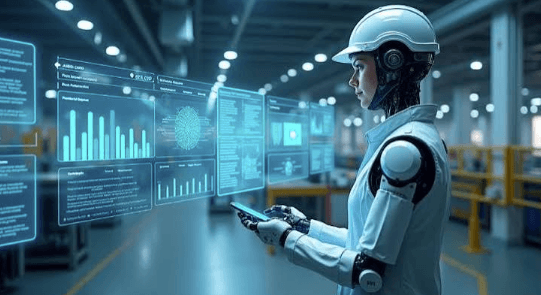
Artificial intelligence in workplace automation integrates intelligent agents to streamline routine tasks and coordinate across systems. It reallocates effort by learning patterns while balancing speed, accuracy, and ethics through transparent, auditable decision processes. Interdisciplinary oversight and human-centric control are essential to mitigate bias and preserve autonomy. Governance aligned with organizational goals mitigates vendor lock-in and preserves reliability. Measuring impact across productivity, culture, and skills informs sustainable strategies that challenge established roles and norms, inviting further inquiry.
Artificial intelligence-powered automation reshapes daily workflows by streamlining routine tasks, coordinating across systems, and reducing human error.
The analysis centers on how agents learn patterns, reallocate effort, and sustain accountability within complex processes.
This inter-disciplinary perspective highlights automation ethics and workflow optimization as core criteria, ensuring transparent decision-making, scalable efficiency, and freedom to reimagine roles without sacrificing reliability or human oversight.
Selecting the appropriate AI tools for workplace automation requires aligning capabilities with organizational goals, technical feasibility, and governance constraints. The assessment proceeds through interdisciplinary criteria: interoperability, modularity, and governance models; benefits versus risks; and long‑term maintainability. Practitioners emphasize avoiding vendor lock in and evaluating data privacy, ensuring transparency, and preserving autonomy. Decisions should balance practicality with principled cautions, promoting sustainable, adaptable automation strategies.
The analysis treats speed ethics and accuracy ethics as interconnected safeguards, not tradeoffs.
It emphasizes transparent decision processes, auditable outcomes, and interdisciplinary oversight to maintain human-centric freedom while pursuing innovative efficiency, reliability, and responsible deployment across diverse organizational contexts.
The impact of workplace AI deployments extends beyond technical performance to measurable changes in productivity, organizational culture, and workforce capabilities. Across disciplines, metrics must balance efficiency gains with privacy preservation and bias mitigation, ensuring transparent measurement of outcomes.
Cultures adapt through collaboration and learning, while skills evolve via reskilling and ongoing education, guiding principled governance and sustainable automation that respects human agency.
See also: techarticalscom
Autonomous governance cannot truly replace oversight; it risks opaque optimization and unchecked bias. A principled, interdisciplinary view suggests layered safeguards, transparency, and fail-safes to balance efficiency with accountability, aligning decision-making with human values while preserving strategic freedom.
Safeguards protect employee privacy by enforcing privacy audits and data minimization, ensuring that only essential information is processed. They balance transparency and freedom, with principled, interdisciplinary analyses guiding governance, risk assessment, and ethically grounded decision-making in AI workflows.
AI adoption will both displace certain core roles and catalyze new ones, driven by Talent transformation; effective AI governance guides transitions, mitigates Job displacement, and aligns skills with evolving work, enabling principled, interdisciplinary, freedom-supporting outcomes.
Bias mitigation is essential; routine AI tasks require systematic checks, audits, and continuous refinement. The approach relies on transparent audit trails, cross-disciplinary evaluation, principled governance, and ongoing education to preserve trust and empower autonomous, freedom-minded work.
Compliance pitfalls arise from ambiguous provenance and opaque reasoning, risking nondisclosure and regulatory drift. Governance frameworks provide structure for accountability, auditability, and principled risk assessment, enabling interdisciplinary scrutiny while preserving institutional autonomy and a measured, freedom-minded approach.
In sum, AI-powered workplace automation promises flawless orchestration of tasks, except when it humbles itself with human quirks. The system’s speed, accuracy, and ethics are preached as a trinity, yet governance often resembles a bureaucratic ballet—precise, cautious, endlessly audited. Ironically, efficiency flourishes precisely where human judgment remains indispensable, guiding tools that respect autonomy while avoiding vendor monocultures. The lesson: automate with rigor, but never abandon principled scrutiny and interdisciplinary dialogue that keeps humanity, not just metrics, at the center.